
Global Enterprise Resource Planning (ERP) Software Market By Offering, By Deployment Type, By Business Type, By Platform, By Application, By Vertical, By Region & Segmental Insights Trends and Forecast, 2024 – 2034
- Industry: Technology
- Report ID: TNR-110-1195
- Number of Pages: 420
- Table/Charts : Yes
- July, 2024
- Base Year : 2024
- No. of Companies : 10+
- No. of Countries : 29
- Views : 10298
- Covid Impact Covered: Yes
- War Impact Covered: Yes
- Formats : PDF, Excel, PPT
ERP software is a suite of integrated applications that organizations use to manage and automate core business processes across various departments such as finance, human resources, manufacturing, supply chain, services, procurement, and others. ERP systems centralize data, streamline workflows, and provide real-time information to help organizations make informed decisions, enhance efficiency, and improve overall productivity.
The ERP software market is experiencing significant growth driven by the increasing need for operational efficiency, data-driven decision-making, and real-time visibility into business processes. Companies of all sizes are adopting ERP solutions to streamline their operations and integrate their diverse functions into a single unified system. Cloud-based ERP solutions are particularly gaining traction due to their scalability, lower upfront costs, and ease of deployment. As businesses continue to digitize and modernize their IT infrastructure, the demand for ERP software is expected to grow, with a focus on customization, industry-specific solutions, and advanced analytics capabilities.
In terms of revenue, the global enterprise resource planning (ERP) software market was worth US$ 62.6 Bn in 2023 and is anticipated to witness a CAGR of 10.8% during 2024 – 2034.

Trends in the Global Enterprise Resource Planning (ERP) Software Market
- Cloud-based ERP Solutions- Cloud ERP systems offer several advantages over traditional on-premise solutions, including lower upfront costs, faster implementation, and scalability. Organizations can easily add or remove functionalities as needed, making it an attractive option for businesses of all sizes. Additionally, cloud-based ERP solutions provide real-time data access from anywhere, supporting remote work and enhancing collaboration across geographically dispersed teams. The pay-as-you-go model also appeals to companies looking to minimize capital expenditure. As data security and privacy concerns are addressed through advancements in cloud technology, the adoption of cloud-based ERP systems is expected to continue growing, driving significant market expansion.
- AI and Machine Learning Integration- The integration of artificial intelligence (AI) and machine learning (ML) into ERP systems is transforming the global ERP software market. These technologies enhance the capabilities of ERP solutions by providing advanced analytics, predictive modeling, and automation of routine tasks. AI-powered ERP systems can analyze large datasets to uncover insights and trends, enabling more informed decision-making. Machine learning algorithms can optimize processes such as demand forecasting, inventory management, and customer relationship management by continuously learning from data patterns. This leads to improved efficiency, reduced costs, and better resource allocation. As organizations increasingly recognize the value of AI and ML in enhancing their ERP systems, the demand for intelligent ERP solutions is expected to rise significantly.
Global Enterprise Resource Planning (ERP) Software Market Revenue & Forecast, (US$ Million), 2016 – 2034
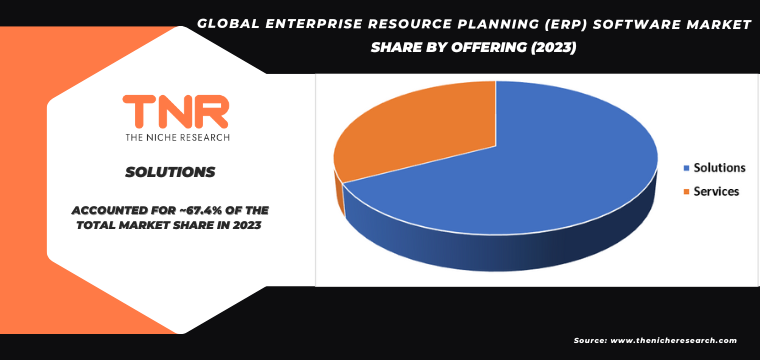
The solutions segment by offerings has dominated the global enterprise resource planning (ERP) software market during the forecast period due to its comprehensive suite of functionalities tailored to various business needs. These solutions encompass modules for finance, human resources, supply chain management, customer relationship management, and more, providing organizations with a holistic approach to managing their operations. The versatility and scalability of ERP solutions enable businesses to streamline processes, improve data accuracy, and enhance decision-making capabilities. Additionally, advancements in technology, such as cloud-based deployments and AI integration, have made these solutions more accessible and efficient, driving their widespread adoption and market dominance.
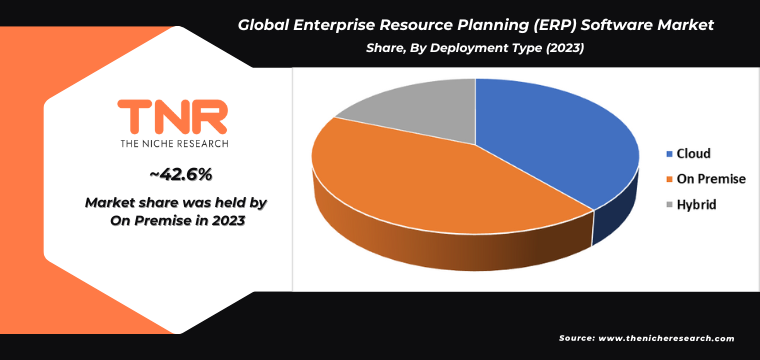
Hybrid segment by deployment type has seen significant popularity and is projected to grow the fastest over the forecast timeline. This approach combines the benefits of both on-premise and cloud-based ERP systems, offering flexibility, scalability, and enhanced data control. Organizations can maintain critical data on-premise for security while leveraging the cloud for additional functionalities and remote access. The hybrid model supports seamless integration and customization, addressing diverse business needs. As companies seek to balance cost efficiency with robust performance, the hybrid deployment model is increasingly favored, driving its rapid adoption and anticipated strong growth in the market.
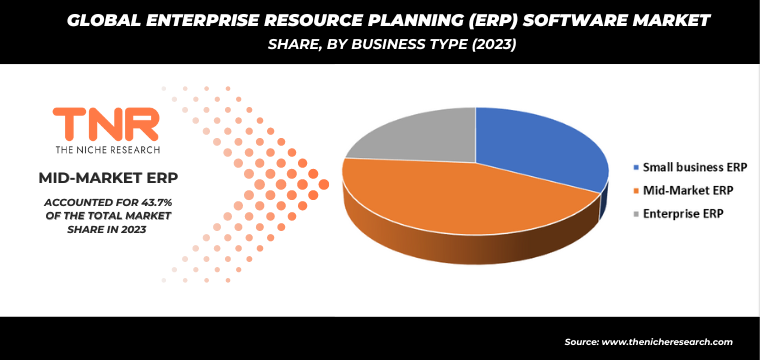
In 2023, the mid-market ERP segment by business type captured the largest revenue share in the global enterprise resource planning (ERP) software market, accounting for 43.7%. This dominance is attributed to the growing adoption of ERP solutions among mid-sized businesses seeking to streamline their operations, enhance efficiency, and gain competitive advantages. Mid-market enterprises benefit from ERP systems’ ability to integrate various functions such as finance, human resources, and supply chain management into a single platform. The scalability and affordability of modern ERP solutions make them particularly appealing to mid-sized businesses looking to optimize their processes and support growth, driving significant market share in this segment.
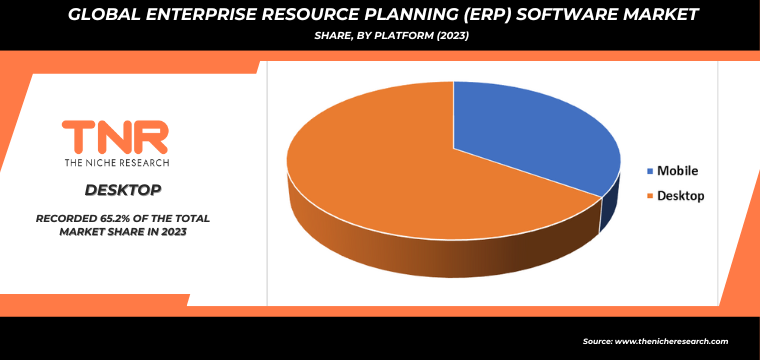
Desktop segment by platform dominated the global enterprise resource planning (ERP) software market during the forecast period. This dominance is due to the reliability and robust performance of desktop ERP solutions, which offer comprehensive functionalities and seamless integration with existing enterprise systems. Desktop ERPs provide enhanced data security, customization options, and powerful processing capabilities, making them a preferred choice for many organizations. Despite the rise of cloud-based solutions, the desktop platform remains popular, especially among large enterprises and industries with stringent data security requirements. Its ability to support complex operations and provide consistent, high-performance computing continues to drive its market dominance.
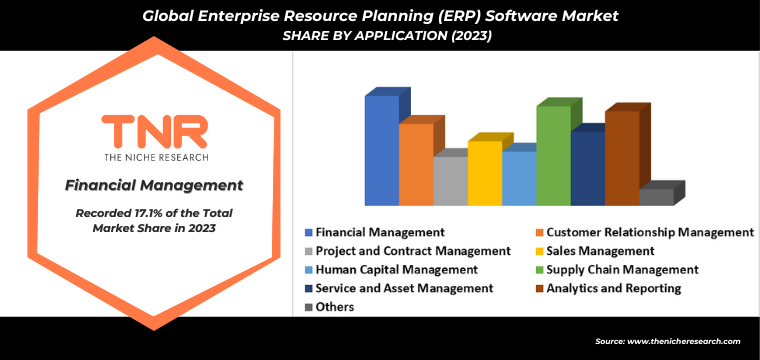
Supply chain management segment by application has gained significant popularity in recent years and is anticipated to grow the fastest over the forecast timeline. Organizations are increasingly focusing on optimizing their supply chain processes to enhance efficiency, reduce costs, and improve overall operational agility. ERP systems dedicated to supply chain management offer comprehensive functionalities such as inventory management, logistics tracking, demand forecasting, and supplier relationship management. These capabilities enable businesses to streamline their supply chain operations, respond quickly to market demands, and mitigate risks effectively. As supply chain complexities increase globally, the demand for robust ERP solutions tailored to supply chain management is expected to soar.
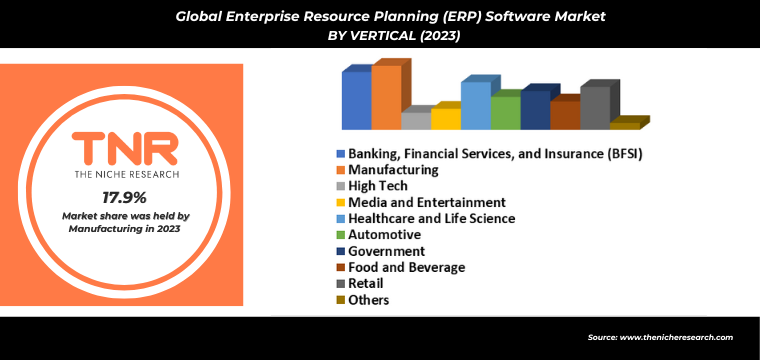
Healthcare and life science segment by vertical has gained significant popularity in recent years and is anticipated to grow the fastest over the forecast timeline. This growth is driven by increasing digitalization efforts within healthcare organizations, aiming to enhance patient care, operational efficiency, and regulatory compliance. ERP systems tailored for this sector offer specialized modules for patient management, electronic health records (EHR), medical billing, and inventory control, facilitating seamless integration across healthcare workflows. As healthcare providers seek to improve outcomes and manage resources more effectively, the demand for ERP solutions in the healthcare and life sciences vertical is expected to continue rising significantly.
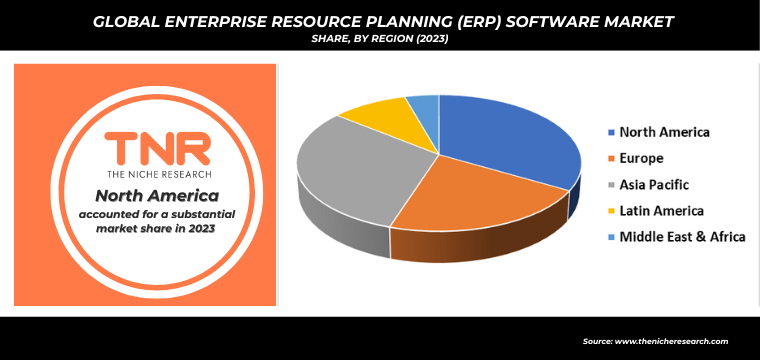
By region, North America is expected to emerge as the fastest growing region in the enterprise resource planning (ERP) software market in 2023. This growth is fueled by widespread adoption of advanced ERP solutions across various industries, including manufacturing, healthcare, retail, and services. Factors driving this expansion include the region’s robust technological infrastructure, high adoption rates of cloud-based ERP systems, and a strong focus on digital transformation initiatives among enterprises. Moreover, North American businesses are increasingly investing in ERP solutions to improve operational efficiency, enhance decision-making capabilities, and maintain competitiveness in the global market. These trends contribute to North America’s projected leadership in ERP software market growth.
Competitive Landscape
The competitive landscape of the enterprise resource planning (ERP) software market is characterized by major players like SAP, Oracle, Microsoft, and Infor, each vying for market share through innovation and comprehensive service offerings. Emerging companies are disrupting the market with cloud-based solutions and niche functionalities. Intense competition drives continuous improvement in features, integration capabilities, and customer support, catering to diverse industries and business sizes.
Some of the players operating in the enterprise resource planning (ERP) software market are
- Epicor Software Corporation
- Hewlett-Packard Development Company, L.P.
- Infor Inc.
- International Business Machines Corporation
- Microsoft Corporation
- NetSuite Inc.
- Oracle Corporation
- Sage Group, plc
- SAP SE
- SEIDOR
- Unit4
- Other Market Participants
Global Enterprise Resource Planning (ERP) Software Market Scope
| Report Specifications | Details |
| Market Revenue in 2023 | US$ 62.6 Bn |
| Market Size Forecast by 2034 | US$ 193.3 Bn |
| Growth Rate (CAGR) | 10.8% |
| Historic Data | 2016 – 2022 |
| Base Year for Estimation | 2023 |
| Forecast Period | 2024 – 2034 |
| Report Inclusions | Market Size & Estimates, Market Dynamics, Competitive Scenario, Trends, Growth Factors, Market Determinants, Key Investment Segmentation, Product/Service/Solutions Benchmarking |
| Segments Covered | By Offering, By Deployment Type, By Business Type, By Platform, By Application, By Vertical, By Region |
| Regions Covered | North America, Europe, Asia Pacific, Middle East & Africa, Latin America |
| Countries Covered | U.S., Canada, Mexico, Rest of North America, France, The UK, Spain, Germany, Italy, Nordic Countries (Denmark, Finland, Iceland, Sweden, Norway), Benelux Union (Belgium, The Netherlands, Luxembourg), Rest of Europe, China, Japan, India, New Zealand, Australia, South Korea, Southeast Asia (Indonesia, Thailand, Malaysia, Singapore, Rest of Southeast Asia), Rest of Asia Pacific, Saudi Arabia, UAE, Egypt, Kuwait, South Africa, Rest of Middle East & Africa, Brazil, Argentina, Rest of Latin America |
| Key Players | Epicor Software Corporation, Hewlett-Packard Development Company, L.P., Infor Inc., International Business Machines Corporation, Microsoft Corporation, NetSuite Inc., Oracle Corporation, Sage Group, plc, SAP SE, Unit4, SEIDOR |
| Customization Scope | Customization allows for the inclusion/modification of content pertaining to geographical regions, countries, and specific market segments. |
| Pricing & Procurement Options | Explore purchase options tailored to your specific research requirements |
| Contact Details | Consult With Our Expert
Japan (Toll-Free): +81 663-386-8111 South Korea (Toll-Free): +82-808- 703-126 Saudi Arabia (Toll-Free): +966 800-850-1643 United Kingdom: +44 753-710-5080 United States: +1 302-232-5106 E-mail: [email protected]
|
Global Enterprise Resource Planning (ERP) Software Market
By Offering
- Solutions
- Services
- Implementation and Deployment Services
- Training and Supports Services
- Consulting Services
- Others
By Deployment Type
- Cloud
- On Premise
- Hybrid
By Business Type
- Small business ERP
- Mid-Market ERP
- Enterprise ERP
By Platform
- Mobile
- Desktop
By Application
- Financial Management
- Customer Relationship Management
- Project and Contract Management
- Sales Management
- Human Capital Management
- Supply Chain Management
- Service and Asset Management
- Analytics and Reporting
- Others
By Vertical
- Banking, Financial Services, and Insurance (BFSI)
- Manufacturing
- High Tech
- Media and Entertainment
- Healthcare and Life Science
- Automotive
- Government
- Food and Beverage
- Retail
- Others
By Region
- North America (U.S., Canada, Mexico, Rest of North America)
- Europe (France, The UK, Spain, Germany, Italy, Nordic Countries (Denmark, Finland, Iceland, Sweden, Norway), Benelux Union (Belgium, The Netherlands, Luxembourg), Rest of Europe)
- Asia Pacific (China, Japan, India, New Zealand, Australia, South Korea, Southeast Asia (Indonesia, Thailand, Malaysia, Singapore, Rest of Southeast Asia), Rest of Asia Pacific)
- Middle East & Africa (Saudi Arabia, UAE, Egypt, Kuwait, South Africa, Rest of Middle East & Africa)
- Latin America (Brazil, Argentina, Rest of Latin America)
Report Layout:
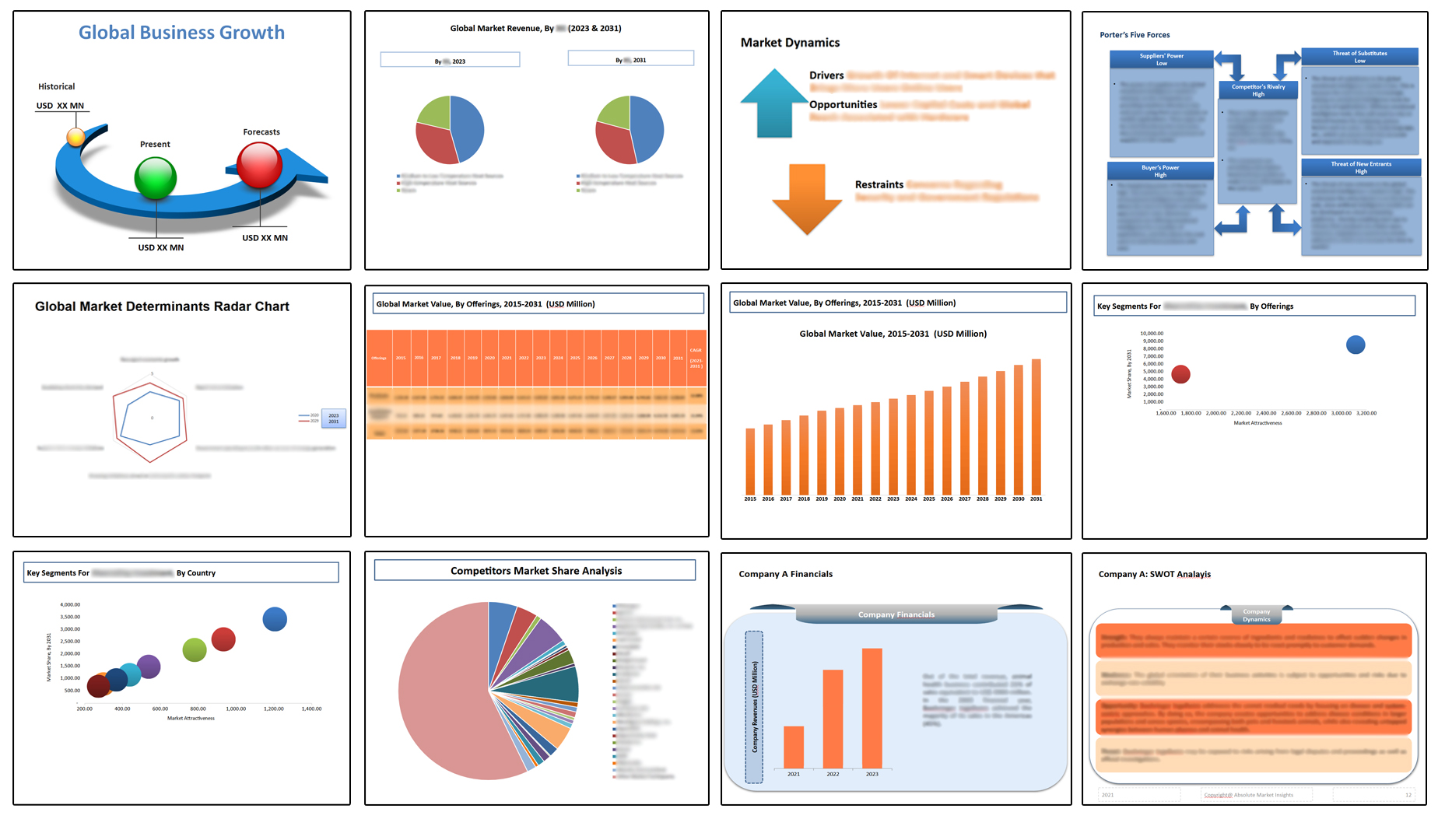
Table of Contents
Note: This ToC is tentative and can be changed according to the research study conducted during the course of report completion.
**Exclusive for Multi-User and Enterprise User.
Global Enterprise Resource Planning (ERP) Software Market
By Offering
- Solutions
- Services
- Implementation and Deployment Services
- Training and Supports Services
- Consulting Services
- Others
By Deployment Type
- Cloud
- On Premise
- Hybrid
By Business Type
- Small business ERP
- Mid-Market ERP
- Enterprise ERP
By Platform
- Mobile
- Desktop
By Application
- Financial Management
- Customer Relationship Management
- Project and Contract Management
- Sales Management
- Human Capital Management
- Supply Chain Management
- Service and Asset Management
- Analytics and Reporting
- Others
By Vertical
- Banking, Financial Services, and Insurance (BFSI)
- Manufacturing
- High Tech
- Media and Entertainment
- Healthcare and Life Science
- Automotive
- Government
- Food and Beverage
- Retail
- Others
By Region
- North America (U.S., Canada, Mexico, Rest of North America)
- Europe (France, The UK, Spain, Germany, Italy, Nordic Countries (Denmark, Finland, Iceland, Sweden, Norway), Benelux Union (Belgium, The Netherlands, Luxembourg), Rest of Europe)
- Asia Pacific (China, Japan, India, New Zealand, Australia, South Korea, Southeast Asia (Indonesia, Thailand, Malaysia, Singapore, Rest of Southeast Asia), Rest of Asia Pacific)
- Middle East & Africa (Saudi Arabia, UAE, Egypt, Kuwait, South Africa, Rest of Middle East & Africa)
- Latin America (Brazil, Argentina, Rest of Latin America)
The Niche Research approach encompasses both primary and secondary research methods to provide comprehensive insights. While primary research is the cornerstone of our studies, we also incorporate secondary research sources such as company annual reports, premium industry databases, press releases, industry journals, and white papers.
Within our pr