
Global Accounting and Budgeting Software Market By Offering, By Application, By Organization Size, By Platform, By Pricing, By Industries: Global & Regional Insights, Growth, Comparative Analysis, Trends & Forecast, 2023 – 2031
- Industry: Technology
- Report ID: TNR-110-1012
- Number of Pages: 420
- Table/Charts : Yes
- November, 2023
- Base Year : 2024
- No. of Companies : 13+
- No. of Countries : 29
- Views : 10088
- Covid Impact Covered: Yes
- War Impact Covered: Yes
- Formats : PDF, Excel, PPT
Global Accounting and Budgeting Software Market was valued at US$ 17.53 Billion in 2022, growing at an estimated CAGR of 12.3% from 2023-2031.
Accounting and budgeting software refers to digital tools designed to streamline financial management processes for businesses and individuals. These software solutions help track, record, and manage financial transactions, expenses, and revenues accurately. They offer features like ledger management, invoicing, expense tracking, and financial reporting, which enhance transparency and efficiency in financial operations. Additionally, budgeting capabilities allow users to create, monitor, and adjust budgets, aiding in effective resource allocation and financial planning. By automating tasks and reducing human error, these software solutions promote accurate financial data analysis and decision-making. They are crucial for maintaining financial health, adhering to regulatory compliance, and ensuring fiscal responsibility.
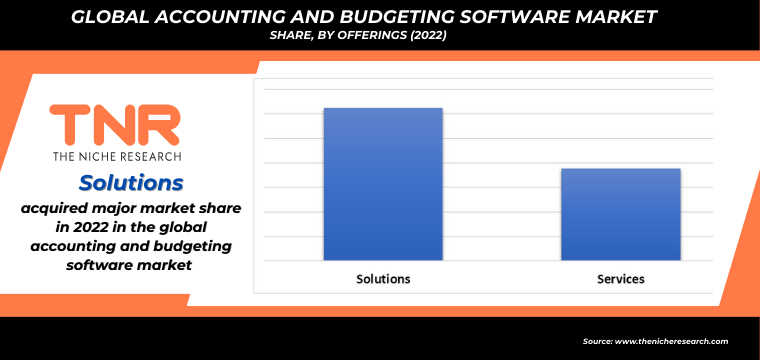
In the global accounting and budgeting software market, accounting software solutions currently dominates due to its widespread adoption across industries. It facilitates core financial operations like ledger management and expense tracking. However, budgeting software is experiencing rapid growth due to the increasing emphasis on precise financial planning.
COVID-19 Impact Analysis on Global Accounting and Budgeting Software Market
Pre-COVID-19, the accounting and budgeting software market was steadily growing due to increasing digitalization and the need for streamlined financial operations. Businesses were adopting these tools for efficient ledger management, expense tracking, and financial reporting. However, post-COVID-19, the market witnessed accelerated growth as remote work became the norm. Companies sought cloud-based solutions to manage finances from dispersed locations. The pandemic highlighted the importance of accurate financial insights for agile decision-making.
Global Accounting and Budgeting Software Market Revenue & Forecast, (US$ Million), 2015 – 2031

Technological advancements drive the accounting and budgeting software market, enabling businesses to enhance financial efficiency. Advanced features like AI-powered expense categorization and real-time data syncing streamline processes and reduce errors. This trend aligns with businesses’ pursuit of increased productivity and accuracy. Moreover, cloud-based solutions, highlighted by a database analysis, provide real-time access, boosting collaboration among remote teams. This driver underscores how technology is reshaping financial management practices. While technology empowers the market, data security concerns act as a restraint. High-profile data breaches in recent years have heightened apprehensions, particularly when sensitive financial information is at stake. Organizations fear potential cyberattacks and unauthorized access to financial data. Compliance with data protection regulations is a significant challenge, further exacerbated by the storage of sensitive financial data on cloud servers. Overcoming these concerns and bolstering user confidence remains a critical challenge for the industry.
 In the global accounting and budgeting software market, the BFSI (Banking, Financial Services, and Insurance) sector currently dominates due to its intricate financial operations. This sector’s complex financial transactions and regulatory compliance requirements contribute to its high adoption rate.
North America dominated the global accounting and budgeting software market in 2022 due to its mature technological landscape and widespread digital adoption. The region’s emphasis on innovation and regulatory compliance contributes to its leadership in this sector.

Competitive Landscape
The accounting and budgeting software market has been competitive due to the diverse needs of businesses and individuals. Key factors that have influenced the competitive landscape include user experience, pricing models, features, integrations, and scalability. Companies have been striving to differentiate themselves in these areas to attract and retain customers. Competition has also led to innovation, with companies introducing features like automation, AI-driven insights, mobile apps, and integrations with other business software. Additionally, the shift towards cloud-based solutions has been a major trend, allowing users to access their financial data from anywhere with an internet connection. Key players operating in the global accounting and budgeting software market are:
- Coupa Software Inc.
- FreshBooks
- Intuit Inc.
- Microsoft
- MIP Fund Accounting
- Oracle
- Planful
- Prophix Software Inc.
- Quicken Inc.
- Sage Group plc
- SAP SE
- Scoro Software
- Vena Solutions
- Wave Financial Inc.
- Xero Limited
- Zoho Corporation Pvt. Ltd
- Other Industry Participants
Global Accounting and Budgeting Software Market Key Takeaways
| Report Specifications | Details |
| Market Revenue in 2022 | US$ 17.53 Bn |
| Market Size Forecast by 2031 | US$ 50.12 Bn |
| Growth Rate (CAGR) | 12.3% |
| Historic Data | 2015 – 2021 |
| Base Year for Estimation | 2022 |
| Forecast Period | 2023 – 2031 |
| Report Inclusions | Market Size & Estimates, Market Dynamics, Competitive Scenario, Trends, Growth Factors, Market Determinants, Key Investment Segmentation, Product/Service/Solutions Benchmarking |
| Segments Covered | By Offerings, By Application, By Organization Size, By Platform, By Pricing, By Industries |
| Regions Covered | North America, Europe, Asia Pacific, Middle East & Africa, Latin America |
| Countries Covered | U.S., Canada, Mexico, Rest of North America, France, The UK, Spain, Germany, Italy, Nordic Countries (Denmark, Finland, Iceland, Sweden, Norway), Benelux Union (Belgium, The Netherlands, Luxembourg), Rest of Europe, China, Japan, India, New Zealand, Australia, South Korea, Southeast Asia (Indonesia, Thailand, Malaysia, Singapore, Rest of Southeast Asia), Rest of Asia Pacific, Saudi Arabia, UAE, Egypt, Kuwait, South Africa, Rest of Middle East & Africa, Brazil, Argentina, Rest of Latin America |
| Key Players | Coupa Software Inc., FreshBooks, Intuit Inc., Microsoft, MIP Fund Accounting, Oracle, Planful, Prophix Software Inc., Quicken Inc., Sage Group plc, SAP SE, Scoro Software, Vena Solutions, Wave Financial Inc., Xero Limited, Zoho Corporation Pvt. Ltd, Other Industry Participants |
| Customization Scope | Customization allows for the inclusion/modification of content pertaining to geographical regions, countries, and specific market segments. |
| Pricing & Procurement Options | Explore purchase options tailored to your specific research requirements |
| Contact Details | Consult With Our Expert
Japan (Toll-Free): +81 663-386-8111 South Korea (Toll-Free): +82-808- 703-126 Saudi Arabia (Toll-Free): +966 800-850-1643 United Kingdom: +44 753-710-5080 United States: +1 302-232-5106 E-mail: [email protected]
|
Global Accounting and Budgeting Software Market:
By Offering
- Solution
-
- Integrated and Customized
- Standalone
- Services
-
- Integration
- Support
- Others
By Application
- Spend Control
- Accounting Automation
- Reimbursement Solutions
- Subscription and Invoice Management
- Budgets
- Financial reports
- Others
By Organization Size
- Startups
- Small and Medium Enterprises
- Large Enterprises
By Platform
- Web Based
- App Based
By Pricing
- Monthly
- Yearly
By Industries
- Marketing Agencies
- Business Consultancies
- Professional Services and Legal Services
- Building and Construction
- Information Technology
- Accountancies
- Architecture
- Government Agencies, Churches and Non-profits
- Training Providers and Educational Institutions
- Banking, Financial Services And Insurance (BFSI)
- Others
By Region
- North America (U.S., Canada, Mexico, Rest of North America)
- Europe (France, The UK, Spain, Germany, Italy, Nordic Countries (Denmark, Finland, Iceland, Sweden, Norway), Benelux Union (Belgium, The Netherlands, Luxembourg), Rest of Europe)
- Asia Pacific (China, Japan, India, New Zealand, Australia, South Korea, Southeast Asia (Indonesia, Thailand, Malaysia, Singapore, Rest of Southeast Asia), Rest of Asia Pacific)
- Middle East & Africa (Saudi Arabia, UAE, Egypt, Kuwait, South Africa, Rest of Middle East & Africa)
- Latin America (Brazil, Argentina, Rest of Latin America)
Report Outline
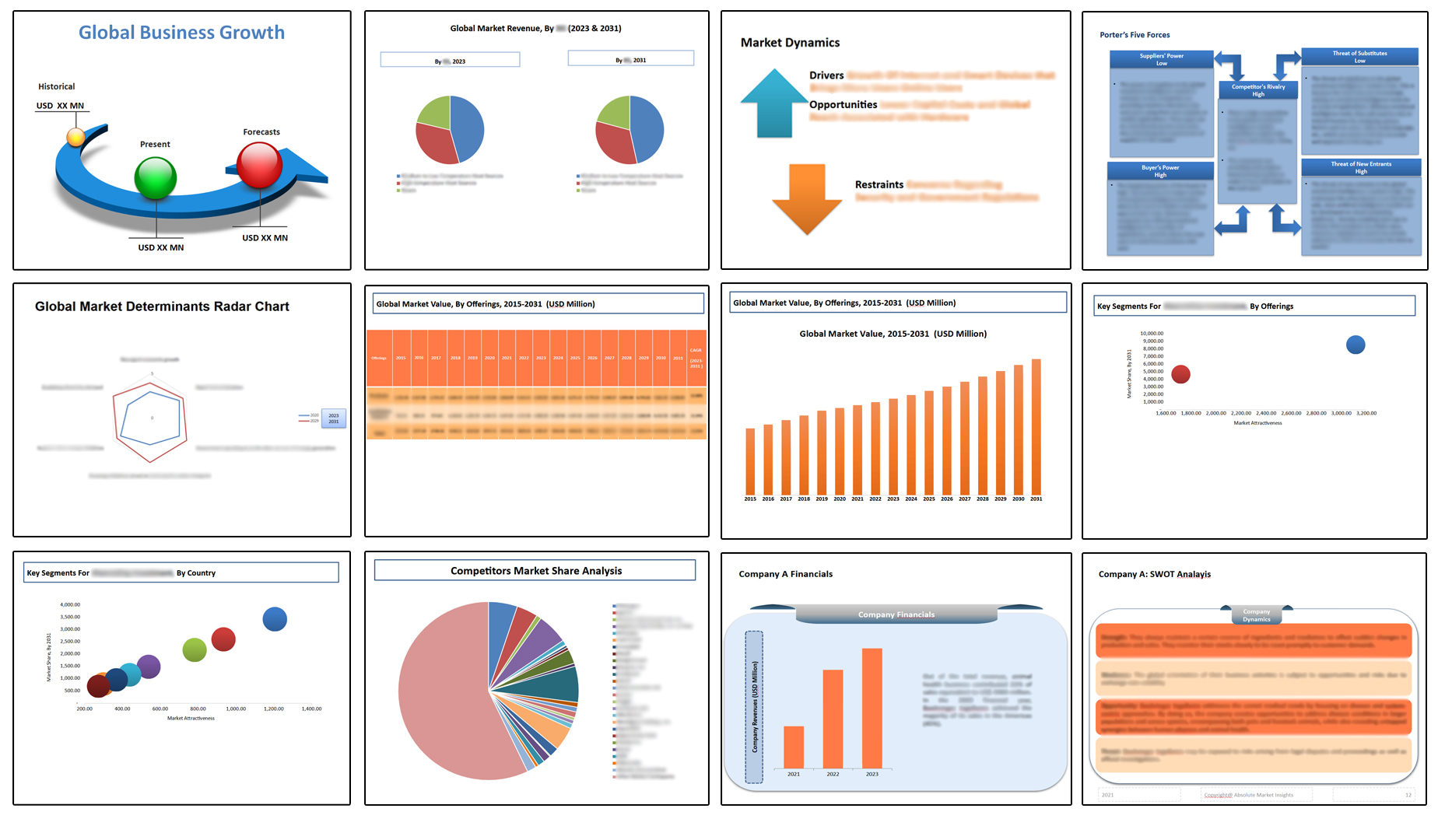
Table of Contents
Note: This ToC is tentative and can be changed according to the research study conducted during the course of report completion.
**Exclusive for Multi-User and Enterprise User.
Global Accounting and Budgeting Software Market
By Offering
By Application
By Organization Size
By Platform
By Pricing
By Industries
By Region
**Note: The report covers cross-segmentation analysis by region further into countries
- Supply Side Analysis: We initiate a supply side analysis by directly contacting market participants, through telephonic interviews and questionnaires containing both open-ended and close-ended questions. We gather information on their portfolios, segment revenues, developments, and growth strategies.
- Demand Side Analysis: To gain insights into adoption trends and consumer preferences, we reach out to target customers and users (non-vendors). This information forms a vital part of the qualitative analysis section of our reports, covering market dynamics, adoption trends, consumer behavior, spending patterns, and other related aspects.
- Consultant Insights: We tap into the expertise of our partner consultants from around the world to obtain their unique viewpoints and perspectives. Their insights contribute to a well-rounded understanding of the markets under investigation.
- In-House Validation: To ensure data accuracy and reliability, we conduct cross-validation of data points and information through our in-house team of consultants and utilize advanced data modeling tools for thorough verification.
- Market Trends and Past Performance (Last Five Years): We accurately analyze market trends and performance data from preceding five years to identify historical patterns and understand the market's evolution.
- Historical Performance and Growth of Market Participants: We assess the historical performance and growth trajectories of key market participants. This analysis provides insights into the competitive landscape and individual company strategies.
- Market Determinants Impact Analysis (Next Eight Years): We conduct a rigorous analysis of the factors that are projected to influence the market over the next eight years. This includes assessing both internal and external determinants that can shape market dynamics.
- Drivers and Challenges for the Forecast Period:Identify the factors expected to drive market growth during the forecast period, as well as the challenges that the industry may face. This analysis aids in deriving an accurate growth rate projection.
- New Acquisitions, Collaborations, or Partnerships: We keep a close watch on any new acquisitions, collaborations, or partnerships within the industry. These developments can have a significant impact on market dynamics and competitiveness.
- Macro and Micro Factors Analysis:A thorough examination of both macro-level factors (e.g., economic trends, regulatory changes) and micro-level factors (e.g., technological advancements, consumer preferences) that may influence the market during the forecast period.
- End-User Sentiment Analysis: To understand the market from the end-user perspective, we conduct sentiment analysis. This involves assessing the sentiment, preferences, and feedback of the end-users, which can provide valuable insights into market trends.
- Perspective of Primary Participants: Insights gathered directly from primary research participants play a crucial role in shaping our forecasts. Their perspectives and experiences provide valuable qualitative data.
- Year-on-Year Growth Trend: We utilize a year-on-year growth trend based on historical market growth and expected future trends. This helps in formulating our growth projections, aligning them with the market's historical performance.